
In short:
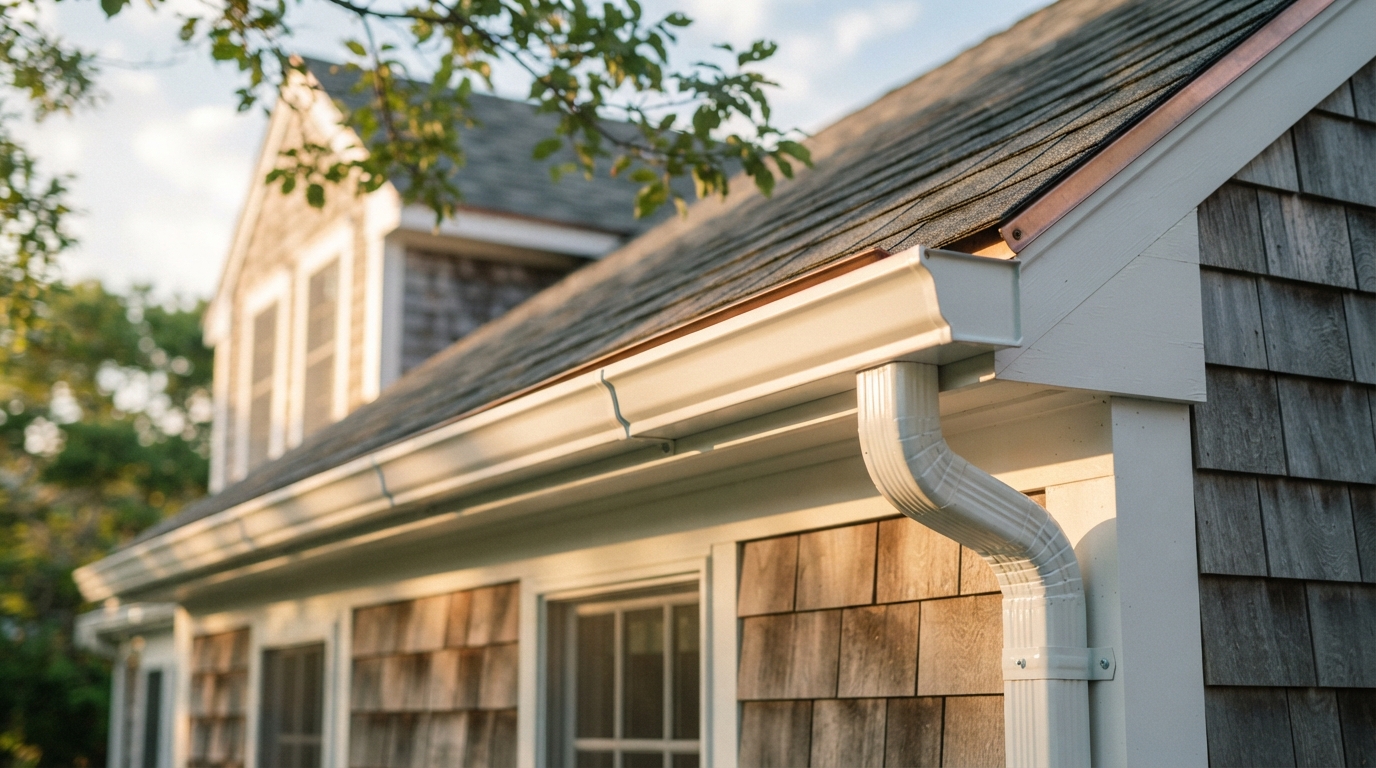
• Seamless gutters are formed in one continuous run, reducing the leak-prone joints common in sectional systems.
• Aluminum is the standard material for coastal Connecticut homes, with copper used on historic properties.
• Old Lyme, CT’s coastal exposure to salt air and storm-driven rain makes material choice and installation quality especially important.
Seamless gutters are custom-formed, one-piece drainage channels fabricated on site to fit a home’s exact roofline, eliminating most of the seams that cause leaks in traditional sectional systems. For homeowners weighing a gutter upgrade in a shoreline community, understanding material options, sizing, and local weather exposure matters more than picking a brand name.
Seamless Gutters differ from store-bought sectional gutters because they are roll-formed from a coil of metal using equipment brought directly to the property, producing a custom length with joints only at corners and downspouts. This construction method is part of why seamless gutters are not a product purchased at a supply house and carried home in a box, since a coil of flat metal stock feeds through rollers that progressively bend it into the finished profile. The reduced number of joints is a primary reason sectional systems in wooded or storm-prone areas tend to develop more frequent leaks and debris buildup at each seam.
Material Choices for Coastal Homes
Material selection affects both lifespan and how well a gutter system holds up against salt air and wind-driven rain, both common in shoreline towns.
• Aluminum : Aluminum accounts for roughly 80% of residential seamless gutter systems installed today, resists rust, and handles most climates well while coming in factory-baked colors.
• Galvanized steel : Steel gutters offer more rigidity than aluminum but require more diligent maintenance and periodic recoating to achieve a competitive lifespan.
• Copper : Often chosen for older or historic homes where appearance and longevity are priorities, though it carries a higher upfront cost than aluminum.
For coastal properties specifically, salt corrosion makes aluminum or copper the more sensible choices, since steel gutters deteriorate quickly in salt air. This is a relevant consideration for homes near Long Island Sound, where airborne salt is a constant factor.
Sizing, Thickness, and Installation Standards
Gutter performance depends heavily on thickness (gauge) and width, not just material type.
|
Specification |
Typical Standard |
Why It Matters |
|
Aluminum gauge |
0.027 in or 0.032 in |
Thicker stock resists denting from ladders, branches, and ice |
|
Width |
5 inch or 6 inch |
6 inch gutters handle more water volume during heavy storms |
|
Hanger spacing |
Roughly every 18-24 inches |
Closer spacing improves support under snow or debris load |
Thicker aluminum gutters at 0.027 or 0.032 inches will not deform under load and will outlast thinner gutter products. Homeowners comparing quotes should ask about gauge thickness directly, since lighter-gauge material is a common way installation costs get reduced without the homeowner realizing it.
Why Local Weather Patterns Matter in Old Lyme, CT
Old Lyme, CT sits directly on the Connecticut shoreline, which brings a combination of salt exposure, coastal wind, and seasonal storm activity that inland towns do not face in the same way. Regional climate data shows projected increases in the frequency and intensity of extreme precipitation events are expected to raise the risk of coastal and inland flooding, with coastal communities particularly vulnerable, according to the NOAA state climate summary for Connecticut. That trend makes properly sized, securely hung gutters more relevant for homes near the water, since overflow during heavy rain events can contribute to foundation and landscaping erosion over time.
Based in Durham, CT, Click Here works with homeowners across Old Lyme, CT on gutter installation projects suited to the area’s coastal conditions. Seamless systems are typically fabricated to match a specific roofline length, which reduces the seam count compared to standard retail sectional gutters.
Frequently Asked Questions
How long do seamless aluminum gutters typically last? Industry sources commonly cite a lifespan of around 20 to 30 years for seamless aluminum systems when installed correctly and maintained with periodic cleaning.
Are seamless gutters more expensive than sectional ones? Installed aluminum seamless gutters generally run higher per linear foot than DIY sectional products, though the reduced leak points and longer lifespan often offset the difference over time.
Can seamless gutters still clog or leak? Joints at corners and downspout connections can still develop issues, though the overall number of potential leak points is far lower than in sectional systems with a seam every few feet.
Does gutter width matter for coastal storm exposure? Wider 6 inch gutters handle a higher volume of water than standard 5 inch gutters, which can be a practical consideration during heavier regional storm events.
Final Thoughts and Next Steps
Choosing a gutter system involves weighing material durability, sizing, and the specific weather exposure of a property’s location, particularly for homes near Connecticut’s shoreline. A published service area overview for Click Here covers general installation details for the region.